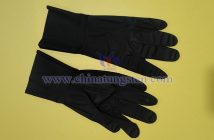
The main applications of tungsten wire knitted gloves are concentrated in high-risk work scenarios where hands are prone to sharp cuts, punctures, tears, or repeated friction. Relying on strong mechanical protection capabilities, this type of glove has become important protective equipment in many industries, especially suitable for work environments that need to balance safety with operational flexibility.
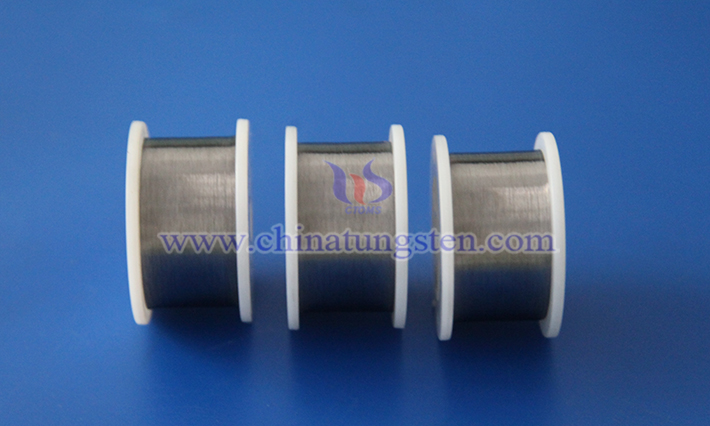
CTIA GROUP LTD Tungsten Wire Image
The glass processing industry is one of the most typical application areas for tungsten wire knitted gloves. During glass cutting, grinding, deep processing, edge trimming, and handling processes, workers frequently come into contact with sharp glass edges, shards, and sharp corners. These edges are often more unpredictable than ordinary blades, posing an extremely high risk of hand lacerations. Tungsten wire knitted gloves can effectively block cuts and punctures from glass fragments, allowing workers to complete delicate operations with greater peace of mind while reducing work-related injuries caused by insufficient protection.
Metal processing and sheet metal operations are also important application scenarios. Processes such as metal sheet shearing, stamping, bending, deburring, and post-welding slag removal are often accompanied by sharp metal corners, metal chips, and tool edges. Once the hand is scratched by these sharp objects, it not only causes pain but may also lead to infection or long-term occupational diseases. Tungsten wire knitted gloves provide reliable protection in these environments, enabling workers to focus more on handling complex parts without excessive concern for hand safety.
The slaughtering and meat processing industry has high requirements for cut protection in gloves. Processes such as slaughtering segmentation, deboning, slicing, and tendon removal involve the continuous use of sharp knives throughout, with blades frequently coming into repeated contact with bones and fascia, easily causing deep hand cuts. Tungsten wire knitted gloves perform excellently in such high-intensity, high-frequency knife operations, significantly reducing the risk of accidental blade injuries, helping workers maintain a stable operating rhythm, and improving production efficiency and food safety levels.
The mechanical manufacturing and assembly fields widely use this type of glove. In tasks such as automotive parts assembly, aerospace component assembly, precision machinery maintenance, and robot upkeep, workers often need to handle metal parts with sharp edges, screws, molds, gears, or tools. Tungsten wire knitted gloves provide greater safety assurance for operators working in confined spaces or complex structures, especially suitable for positions requiring prolonged tool holding or repeated disassembly and assembly.
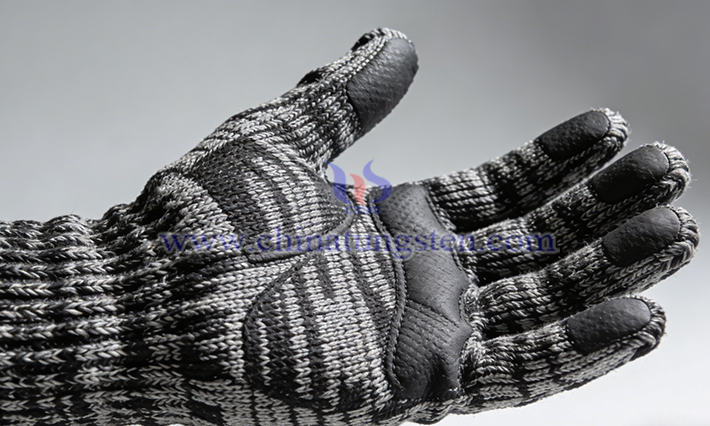
Tungsten Wire Knitted Gloves Image
Construction demolition and firefighting rescue scenarios also have urgent demands for glove protection. During the demolition of old buildings, cutting rebar, clearing glass debris, and handling discarded metal structures, hands are easily punctured by protruding rebar, broken glass, or rusted metal sheets. In firefighting rescue, rescuers may come into contact with sharp objects, broken glass, or hot metal parts in collapsed ruins. Tungsten wire knitted gloves provide critical protection in these emergency and high-risk environments, helping practitioners complete search, rescue, cleanup, and demolition tasks while reducing the possibility of secondary injuries.
Tool manufacturing, blade grinding, and packaging industries also commonly feature them. In the knife production process, workers frequently contact unfinished blade edges, scissor blades, or saw blade edges; packaging workshops sometimes need to handle metal straps, plastic film cutting tools, or sharp packaging materials. In these scenarios, tungsten wire knitted gloves become the preferred choice for daily protection. In addition, some special industrial fields such as shipbuilding, wind turbine blade maintenance, railway maintenance, and waste recycling have also gradually adopted tungsten wire knitted gloves.