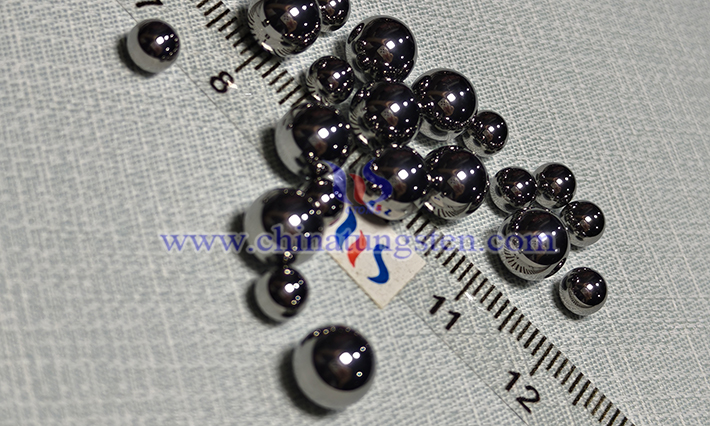
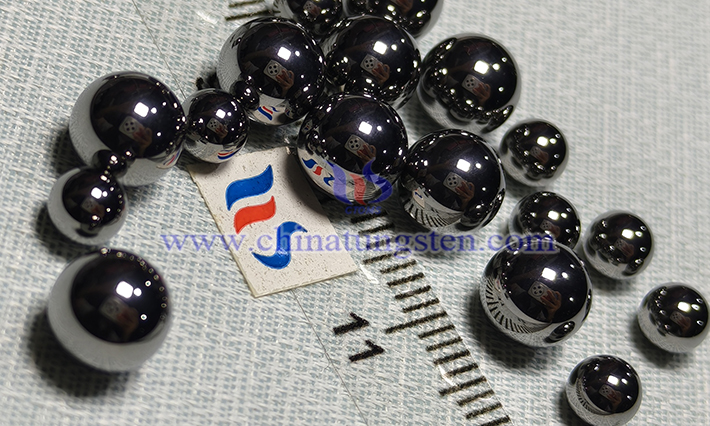
Ultrafine grinding tungsten beads are cemented carbide grinding media specifically designed for high-precision grinding requirements. They are typically made of tungsten carbide (WC) or ultrafine crystalline tungsten powder, possessing ultra-high density, ultra-high hardness, and excellent wear resistance. They are core tools in nanomaterial production, ultrafine grinding of lithium battery positive and negative electrode materials, and precision polishing of electronic ceramics.
I. Material Characteristics of Tungsten Beads for Ultrafine Grinding
1.1 Ultra-High Density: Tungsten carbide beads have a density of up to 15 g/cm3, which is 2.5 times that of zirconium oxide beads (approximately 6 g/cm3). This high density gives them stronger kinetic energy transfer capabilities, significantly improving grinding efficiency at the same equipment speed, while avoiding increased equipment wear and energy consumption caused by increased speed.
1.2 Ultra-high Hardness: Tungsten beads have a Vickers hardness (HV) of up to 2000 and a Mohs hardness of 8.5-9, far exceeding that of zirconium oxide (HV 1300-1600, Mohs 7.5). This hardness allows them to directly grind ultra-hard materials (such as alumina, boron nitride, and silicon carbide) with extremely low wear rate, reducing the risk of product contamination.
1.3 Chemical Stability: Tungsten beads are resistant to acids, alkalis, and high temperatures, and can be used for extended periods in harsh aqueous systems or acidic/alkaline environments, ensuring the purity of the grinding process and meeting the requirements of high-end fields such as electronics and medicine for materials to be free from contamination.
II. Application Scenarios of Tungsten Beads for Ultrafine Grinding
2.1 Carbide Forming: Tungsten beads are used as grinding media to optimize the particle size distribution of alloy powders.
2.2 Gemstone Machining: Utilizing the high hardness of tungsten beads to achieve precision cutting.
2.3 Lithium-ion Battery Material Grinding: Tungsten carbide beads can control the particle size of materials to D50 < 5μm, significantly improving battery energy density. The grinding speed is faster than ordinary steel beads or zirconium oxide beads, and the final particle size of the ground material is finer and more uniform, resulting in lower wear rate. 2.4 Electronic Ceramic Grinding: Ensures ceramic powder particle size deviation <2%, meeting the miniaturization and high reliability requirements of 5G base stations. Achieves low-impurity dispersion of ceramic slurry, ensuring component dimensional accuracy. 2.5 Pigment and Coating Grinding: Includes grinding of high-end automotive coatings and industrial anti-corrosion coatings. Uniform dispersion of pigment particles improves color saturation and weather resistance, reduces product contamination, and extends coating lifespan.