Tungsten beads, especially tungsten carbide beads and cemented carbide beads, are widely used in grinding. Their high hardness, high density, wear resistance, chemical stability, and high-temperature resistance make them a core medium in high-end grinding applications.
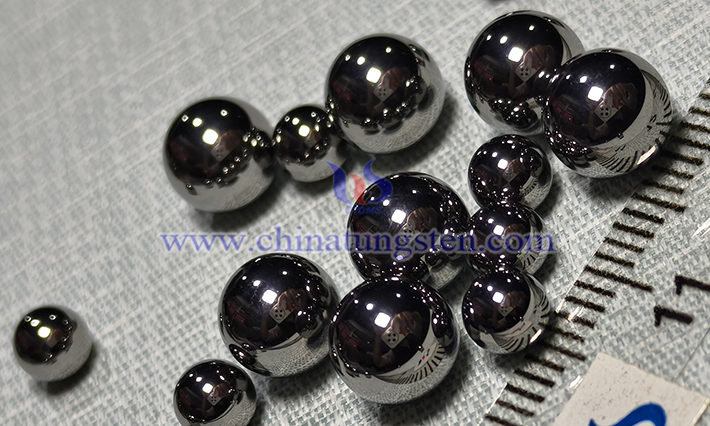
I. Application Scenarios of Tungsten Beads in Grinding
1.1 Lithium-ion Battery Material Preparation
Ultrafine Grinding: Tungsten beads are used in the wet grinding of positive and negative electrode materials for lithium-ion batteries, controlling the particle size to D50 < 5μm, significantly improving battery energy density.
Nanoscale Dispersion: Nanoscale grinding precision achieves uniform dispersion of active materials, directly affecting the battery's charge/discharge efficiency and cycle life.
1.2 Electronic Ceramic Processing
Precision Polishing: In the production of multilayer ceramic capacitors (MLCCs), tungsten beads ensure that the ceramic powder particle size deviation is <2%, meeting the miniaturization and high reliability requirements of 5G base stations for electronic components.
Casting: Used for low-impurity dispersion of ceramic slurries, ensuring component dimensional accuracy up to ±0.1μm.
1.3 Pigment and Coating Fields
Uniform Dispersion: Ultrafine tungsten beads achieve uniform dispersion of pigment particles, improving the color saturation and weather resistance of coatings, especially suitable for high-end automotive coatings and industrial anti-corrosion coatings.
Improved Grinding Efficiency: Tungsten carbide beads have a large single bead weight and high impact energy, which can shorten grinding time and reduce product contamination.
1.4 Other Fields
Hard Alloy Forming: Tungsten beads are used as grinding media for precision machining of hard alloy blades and molds.
Gemstone Processing: Utilizing the high hardness of tungsten beads, fine polishing of gemstones is achieved.
Mineral Processing: In the process of ore crushing and purification, grinding efficiency is improved and energy consumption is reduced.
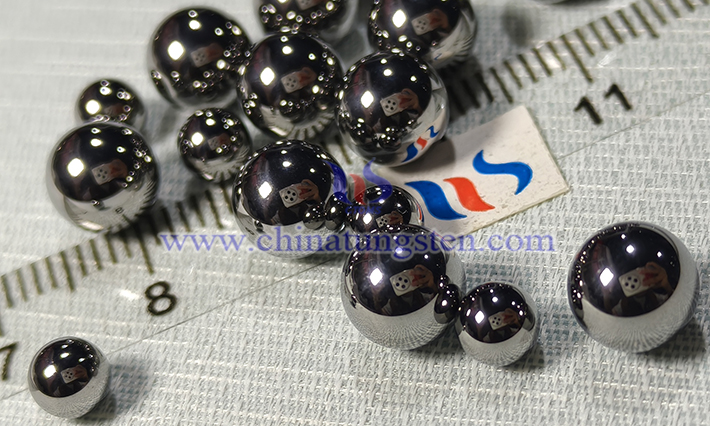
II. Advantages of Tungsten Beads in Grinding Applications
2.1 Ultra-High Hardness: Tungsten beads have a Mohs hardness of 8.5-9, far exceeding that of zirconium oxide (7.5) and alumina (9), enabling them to resist extreme wear and extend service life.
2.2 High Density and Inertia: Tungsten beads have a density as high as 15 kg/L (nearly three times that of zirconium-based grinding media), providing greater impact energy, accelerating the grinding process, and improving production efficiency.
2.3 Wear Resistance and Low Contamination: Tungsten beads themselves have a low wear rate, reducing the introduction of impurities during the grinding process and ensuring product purity. This makes them particularly suitable for applications with extremely high cleanliness requirements (such as lithium batteries and electronic ceramics).
2.4 Chemical Stability: Insoluble in water, hydrochloric acid, and sulfuric acid, but soluble only in a mixture of nitric acid and hydrofluoric acid. They can be used stably in acidic or alkaline environments, avoiding contamination caused by media corrosion.
2.5 High Temperature Resistance: Tungsten beads have a melting point of 2870℃, maintaining stable performance during high-temperature grinding and preventing deformation or failure due to temperature increases.